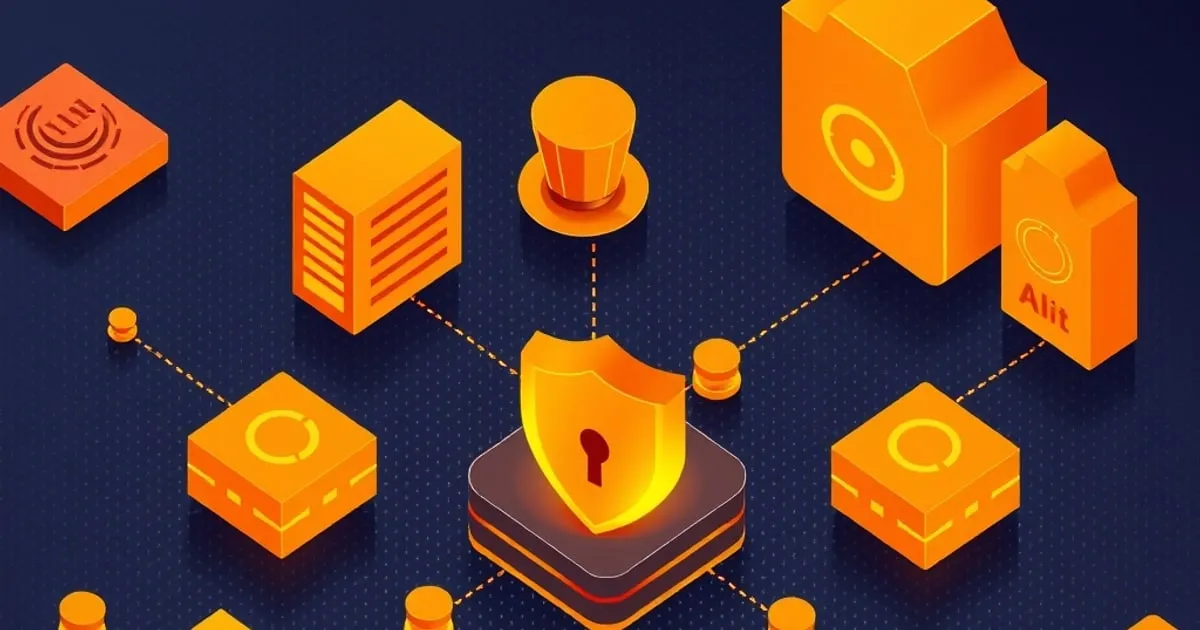
Best AI Supply Chain Security Tools in 2026
A practitioner's guide to the best AI supply chain security tools: model artifact scanners, MLOps pipeline hardening, AIBOM generators, and what the NSA's March 2026 guidance says you must address.
Evaluating the best AI supply chain security tools means grappling with a threat surface most AppSec programs do not yet model correctly. A model checkpoint is not a binary — it is executable code, a frozen weights graph, or a serialized Python object, and any of those formats can carry a payload. In March 2026, the NSA’s AI Security Center (AISC) plus seven allied national agencies published the most comprehensive multinational AI supply chain guidance to date ↗, defining a six-component attack surface: training data, models, software, infrastructure, hardware, and third-party services. Every tool category below maps to at least one of those six components.
What the AI Supply Chain Actually Exposes
Traditional SCA tools catch malicious npm packages. The AI supply chain adds a parallel risk: a model downloaded from Hugging Face, a pre-trained checkpoint shipped with an SDK, or a fine-tuned adapter provided by a contractor can all carry malicious payloads that survive SAST and SCA scans entirely.
The most common vector today is pickle deserialization. PyTorch’s default .pt and .pth formats use Python’s pickle module, which executes arbitrary code on load. A model file with an embedded reverse shell bypasses every dependency scanner in the pipeline because it is not a software package — it is data that executes. MITRE ATLAS catalogs this as ML Supply Chain Compromise ↗, one of the 84 techniques in the framework as of the 2025 refresh. Architectural backdoors embedded in weight tensors are harder still: they carry no detectable code, only manipulated parameters that trigger adversarially on specific inputs.
AIBOM — AI Bill of Materials — is the governance layer the NSA guidance specifically mandates. An AIBOM catalogs model provenance, training data sources, framework versions, fine-tuning lineage, and known CVEs in model dependencies. Without it, procurement decisions, third-party model ingestion, and regulatory audits are guesswork.
Best AI Supply Chain Security Tools
HiddenLayer AISec Platform
HiddenLayer ↗ is the most mature purpose-built ML security platform at the time of writing. Its ModelScanner analyzes artifacts across 35+ formats — PyTorch, TensorFlow, ONNX, GGUF, pickle, safetensors — and detects malicious code injections, deserialization exploits, architectural backdoors, and trojaned weights before deployment. The 2025 AISec Platform 2.0 release consolidated four domains: AI asset discovery, supply chain security, runtime inference defense, and attack simulation red-teaming. AIBOM generation is included.
For teams already dealing with model exfiltration and adversarial input threats, the coverage at aisec.blog ↗ on agent exploitation and model extraction complements what HiddenLayer’s scanner catches at the artifact layer.
Fit for: Enterprises ingesting pre-trained models from public registries, regulated industries needing AIBOM for audit.
Palo Alto Prisma AIRS (formerly Protect AI)
Palo Alto Networks completed its acquisition of Protect AI in 2025 and folded the product into Prisma AIRS. The inherited Guardian product scans model artifacts for tampering, malicious scripts, and deserialization attacks. The broader Protect AI open-source toolkit — ModelScan, Rebuff (prompt injection detection), and NB Defense (Jupyter notebook scanner) — remains available independently and remains worth deploying even if you do not run the commercial platform.
modelscan is a one-command check: modelscan scan -p ./model.pkl exits non-zero on any format that executes on load, integrates with CI, and covers Keras H5, PyTorch, TensorFlow SavedModel, and pickle natively. If you are evaluating the best AI supply chain security tools on a constrained budget, starting with the open-source toolchain is rational.
Fit for: DevSecOps teams integrating model scanning into CI/CD, red teams auditing third-party model artifacts.
Sonatype Nexus One
Sonatype’s platform extends its traditional SCA heritage into the AI stack. Nexus One adds AI/ML model visibility and governance, malware detection for model artifacts, automated dependency management for ML frameworks (PyTorch, TensorFlow, JAX), and SBOM/AIBOM governance across the full artifact repository. The model registry integration means models pass through the same policy engine as Python packages and container images.
Fit for: Organizations already running Sonatype for software SCA who want unified governance across software and model artifacts.
Cycode
Cycode is an AI-native Application Security Posture Management platform that bundles SAST, SCA, secrets scanning, IaC scanning, container scanning, and Software Supply Chain Security under one control plane. The supply chain module covers pipeline integrity (CI/CD configuration hardening, branch protection enforcement, artifact signing) and ingestion controls for ML model dependencies. It is less focused on model artifact deep scanning than HiddenLayer or Prisma AIRS, but stronger on pipeline posture and developer workflow integration.
Fit for: Platform engineering teams that want a single ASPM pane covering both software and AI pipeline integrity.
Sigstore for ML Models
Sigstore — the Linux Foundation project behind cosign and rekor — has been extended to ML model signing. The model signing project uses the same keyless signing infrastructure (Fulcio CA + Rekor transparency log) to generate tamper-evident attestations for model files. Verification is a one-liner: sigstore verify --bundle model.sig model.safetensors. This does not scan for malicious content but enforces provenance: a signed model cannot be silently swapped between training and deployment. The NSA guidance explicitly recommends cryptographic integrity validation for model artifacts.
Fit for: MLOps teams building hermetic model pipelines, any organization following SLSA level 3+ for AI artifacts.
What to Prioritize
The NSA’s six-component taxonomy is a practical triage checklist. Run through it against your current controls:
- Training data — do you scan for data poisoning signals, provenance mismatches, or adversarial label injection in your training pipeline?
- Models — are model artifacts scanned for malicious code and architectural backdoors before they reach inference infrastructure?
- Software — does your SCA toolchain cover ML framework CVEs (e.g. TensorFlow, PyTorch, Hugging Face Transformers)?
- Infrastructure — is your ML training infrastructure (notebooks, MLflow, Kubeflow) hardened against lateral movement?
- Hardware — are GPU driver and firmware update channels verified?
- Third-party services — are externally hosted model APIs treated as untrusted inputs, with output validation and rate controls?
Most teams have partial coverage on component 3. Almost none have coverage on components 1 and 2. The best AI supply chain security tools for any given organization are the ones that close the gaps with the highest exploitability — and right now, that is almost always model artifact scanning and MLOps pipeline integrity.
For tracking newly disclosed ML CVEs and vulnerability disclosures as they emerge, ai-alert.org ↗ maintains a running incident and CVE tracker specific to AI and ML systems.
Sources
-
NSA AISC et al. — Artificial Intelligence and Machine Learning Supply Chain Risks and Mitigations (March 2026) ↗ — Eight-nation joint guidance defining the six-component AI supply chain taxonomy and mandating AIBOM, cryptographic integrity validation, and threat modeling across all components.
-
HiddenLayer — AI Supply Chain Security ↗ — Platform documentation covering ModelScanner’s 35-format coverage, AIBOM generation, and the AISec Platform 2.0 architecture.
-
MITRE ATLAS SAFE-AI Framework Report ↗ — MITRE’s framework for securing AI systems, including the ML Supply Chain Compromise technique and adversarial attack taxonomy.
-
Cloud Security Alliance — Eight-Nation AI/ML Supply Chain Guidance Research Note ↗ — CSA summary and analysis of the NSA joint publication with practical implementation context.
Sources
ML CVEs — in your inbox
CVEs in ML libraries, frameworks, and the AI/ML supply chain. — delivered when there's something worth your inbox.
No spam. Unsubscribe anytime.
Related
LangChain Security Vulnerabilities 2026: CVEs, Attack Chains, and What to Patch
Four verified CVEs in LangChain and LangGraph expose API secrets, filesystem files, and conversation history. CVSS scores, attack paths, and patch versions for 2026.
How to Triage an ML-Stack CVE: A Practical Workflow
A repeatable workflow for taking an ML-library CVE from 'a scanner flagged it' to a defensible decision — without panic-patching everything or trusting the CVSS number to do your thinking.

Hugging Face Transformers & Hub: Supply-Chain Risks and Real Advisories
The Hugging Face ecosystem is the npm of machine learning — and it carries the same supply-chain exposure. A tour of verified Transformers CVEs and what they reveal about trusting models, configs, and the tooling meant to protect you.